27.1.2026
The Hidden Financial Benefits of Building a Certified Passive House — Even at Code-Level Costs
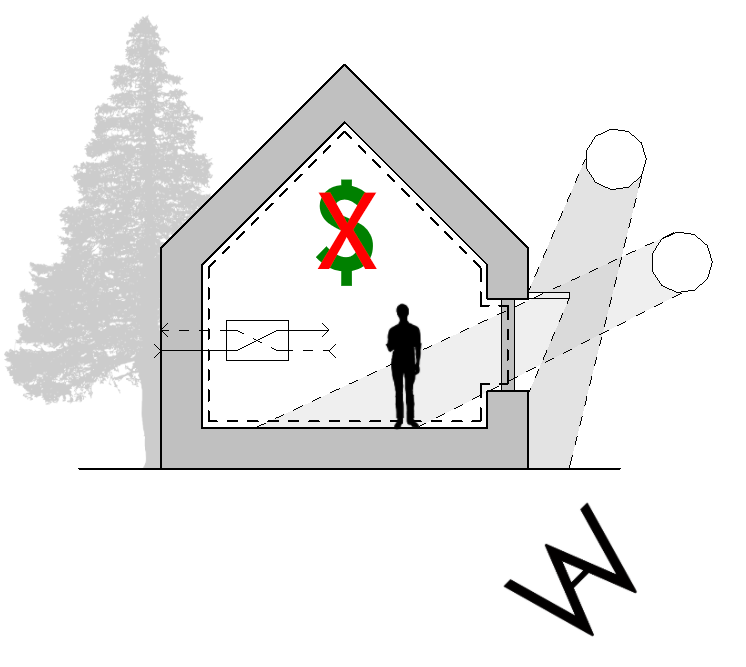
In an era of rising energy prices, environmental consciousness, and evolving building standards, the idea of constructing a high-performance home can seem like a luxury, but what if it could be a significant increase in upfront cost? Today, we explore how a certified Passive House can deliver long-term financial advantages while keeping construction costs comparable to those of minimum building-code projects.
What Is a Certified Passive House?
A Passive House is a building standard focused on energy efficiency, durability, and occupant comfort. Through meticulous design, high-performance insulation, airtight construction, high-efficiency windows, and balanced ventilation with heat recovery (HRV/ERV), Passive Houses use very little energy for heating and cooling.
Certification, such as through Passive House Institute(PHI) or Passive House Institute US (PHIUS), verifies that a home meets strict performance criteria, ensuring results aren’t just theoretical.
Breaking the Myth: Passive Houses Are Always More Expensive to Build
Traditionally, many builders and homeowners assume that a Passive House must cost significantly more than a conventional structure. While conventional wisdom often points to expensive insulation, advanced windows, and precise construction methods as cost drivers, the reality is nuanced. Research and real-world projects show that with smart planning, integrated design, and competitive trade pricing, you can build to Passive House standards with construction costs comparable to a home built to minimum code requirements.
That’s a game-changer, because once you’re essentially paying the same amount upfront, all the financial benefits of Passive House performance fall straight to the bottom line.
1. Dramatically Lower Operating Costs
Perhaps the most straightforward financial win is energy savings.
· Up to 80–90% reduction in heating and cooling costs: Passive Houses require far less energy to maintain comfortable indoor temperatures. This translates to hundreds or thousands of dollars saved annually on energy bills compared to code-minimum homes.
· Reduced energy price sensitivity: Because consumption is so low, even volatile electricity or fuel prices have a much smaller impact on your household budget.
· Over a 30-year period, these savings can amount to tens of thousands of dollars.
2. Enhanced Durability = Lower Maintenance & Repair Costs
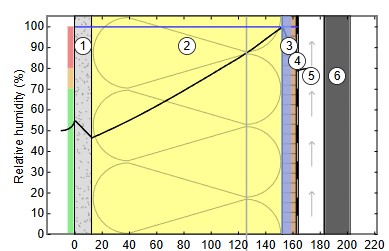
Passive House construction places heavy emphasis on moisture control, airtightness, and thermal protection. These aren’t just for energy performance, they protect the building envelope.
· Fewer moisture issues — Less risk of mold, rot, and structural damage.
· Durable assemblies — Components designed to last.
· Stable indoor conditions — Less stress on building materials over time.
All of this means lower lifecycle maintenance costs and a reduced risk of expensive repairs down the road.
3. Improved Comfort Can Increase Property Value
While comfort may not seem like a “financial benefit” at first glance, it is a value driver in the real estate market.
Passive Houses offer:
· Consistent indoor temperatures
· Superior air quality
· Quiet, draft-free spaces
These tangible quality-of-life advantages are increasingly recognized by buyers and appraisers alike. Multiple market studies in North America and Europe have shown that high-performance homes can command premium resale values. That means greater equity when the time comes to sell.
4. Resilience and Future-Proofing
As building codes tighten and energy standards evolve, homes that already meet Passive House performance are better positioned for future regulatory shifts. That future-readiness can protect against:
· Costly retrofits
· Obsolescence risks
· Reduced market appeal
Plus, low energy use is increasingly valued by sustainability-focused buyers and institutional investors.
5. Cost Neutrality at Construction Through Smart Design and Execution
So how do you actually build a Passive House without a premium price tag?
Here are the key strategies:
Integrated Design Early
The earlier energy modeling and Passive House principles are included in design, the more opportunity there is to optimize structure and systems.
Simple Geometry & Efficient Detailing
Clean, compact forms reduce surface area and complexity —lowering costs for insulation and construction labor.
Competitive Trade Pricing
By specifying performance goals early, trades can price accurately and coordinate efficiently.
Value Engineering, Not Value Compromising
Rather than cutting performance, cost planning looks for smarter assemblies and economies of scale.
Many projects have shown that when these strategies are followed, the incremental cost of Passive House components is offset by savings in mechanical systems, reduced ductwork, and simplified HVAC.
Conclusion: A Smart Investment in Long-Term Value
Building a certified Passive House with construction costs similar to a code-minimum home isn’t just possible — it’s a pathway to real financial returns.
· Lower energy bills
· Reduced maintenance and repair costs
· Increased resale value
· Resilience to future regulations
· Better comfort and health outcomes
When you look beyond the first cost and consider that a Passive House is inherently an investment in quality, efficiency, and durability, the financial benefits become clear.
If you’re contemplating a high-performance home, consider Passive House certification not as an added expense — but as an opportunity to maximize value over the lifecycle of your home.